
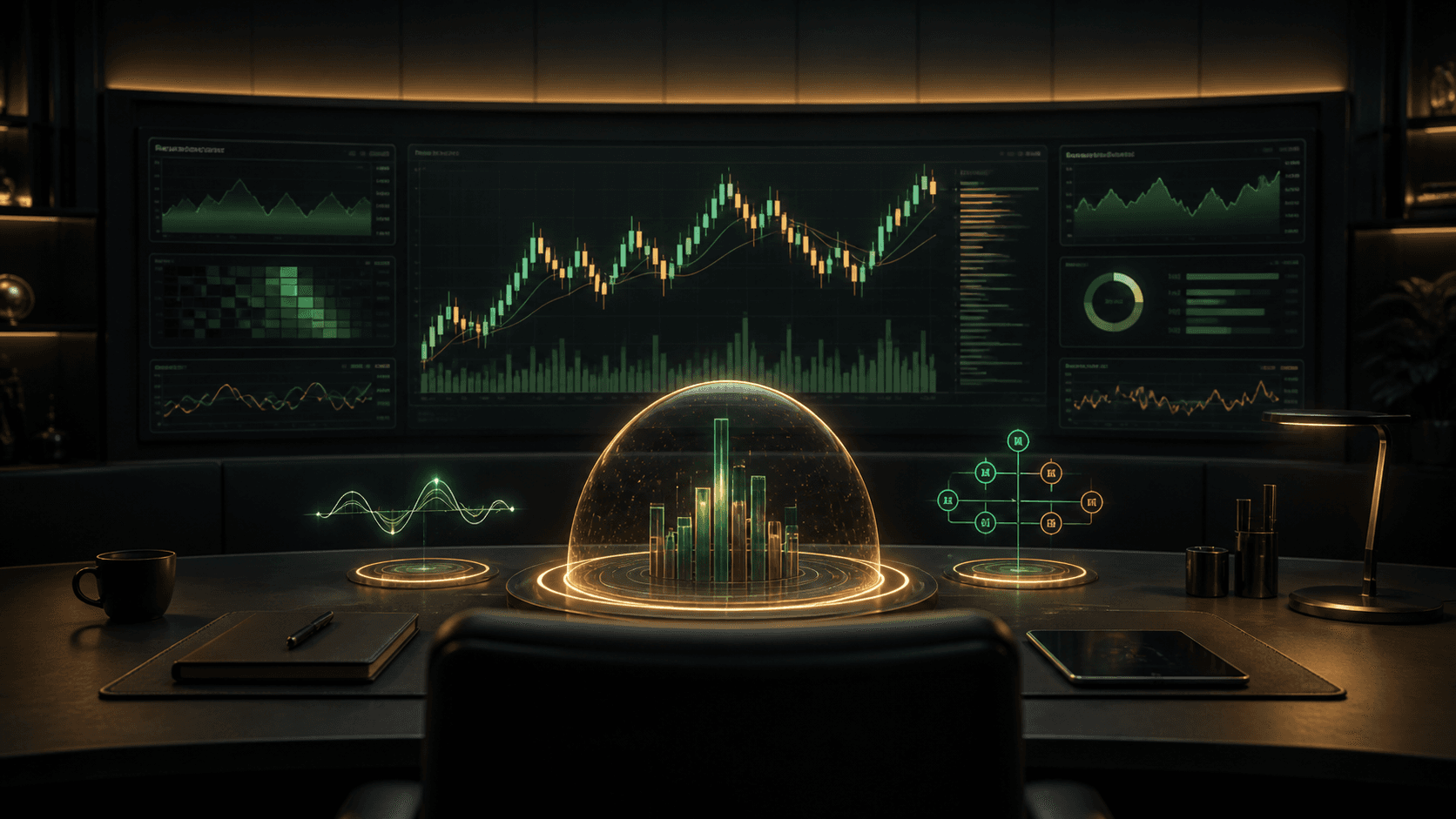
The most useful application of AI in trading is not a promise to predict the next winning trade. It is a system that makes risk visible before a decision becomes expensive.
Markets are uncertain by nature. A well-designed AI assistant can help a trader follow a defined process, surface the context they might miss, and review outcomes without pretending to remove uncertainty.
Where AI can help responsibly
- Summarise earnings, filings, macro releases, and relevant news.
- Show portfolio scenarios under defined price, volatility, or correlation assumptions.
- Flag concentration across correlated positions.
- Remind a trader when a planned limit or stop is being breached.
- Turn a trade thesis, entry, exit, and outcome into a reviewable journal.
- Identify when liquidity or volatility sits outside the range a strategy expects.
These uses do not require an AI system to control an account. Often, the better design is an assistant that explains, flags, and documents while the person remains responsible for the decision.
Build the framework first
Before connecting AI to any execution workflow, define rules it cannot break:
- Maximum loss per trade.
- Position sizing based on invalidation distance.
- Portfolio concentration limits.
- Liquidity checks.
- Daily and weekly drawdown limits.
- A pause-and-review rule after a defined loss or error threshold.
AI can help calculate and monitor these rules. It should not quietly rewrite them when the market becomes emotional or fast.
Human accountability stays central
For professional trading teams, the governance question is as important as model quality. Document the data used, keep an audit trail of recommendations, test edge cases, and make it clear who can override the system.
Any service claiming guaranteed returns or a risk-free AI trading system deserves extra scrutiny. Better decisions come from disciplined risk management, not certainty theatre.